Beyond the Pose: Lessons from the Leg Raise with Knee Hug
Exploring how mindful movement connects physical strength, breathing, digestion, and self-awareness.
Some yoga postures look deceptively simple. The Leg Raise with Knee Hug is one of them.
I was introduced to this posture recently during my Kundalini Yoga teacher training with Guru Singh.
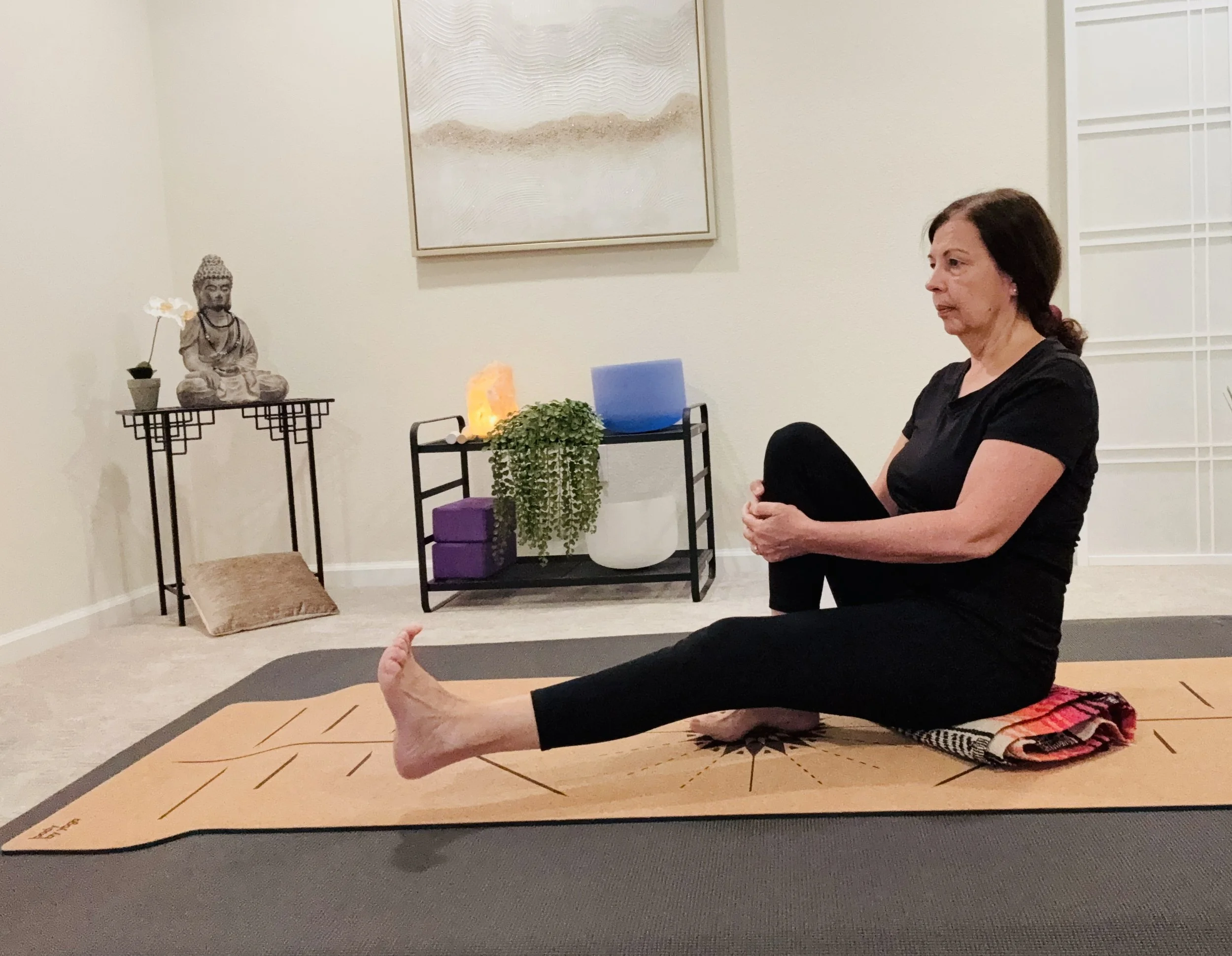
The posture involves sitting upright, hugging one knee toward the chest, and extending the opposite leg forward, keeping it lifted just above the floor while taking long, deep breaths.
At first glance, it may not seem particularly demanding. But hold the position for a minute, and you'll discover how much is happening beneath the surface.
This posture brings together strength, stability, and body awareness. It also offers an opportunity to explore the connections between movement, breathing, the nervous system, and digestion.
How to Practice
Begin by sitting comfortably on your mat. Elevate your hips on a folded blanket or firm cushion. This can help you maintain the natural curves of your spine and sit upright with greater ease.
Extend both legs forward. Sit tall, lengthening through the crown of your head while keeping your shoulders relaxed.
Bend one knee toward your chest. Wrap your hands around your shin, gently hugging the knee toward your body without compressing your abdomen excessively.
Lift the opposite leg slightly off the floor. Keep the leg extended and the foot gently flexed. You don't need to lift it high. Even an inch or two is enough to activate the muscles involved.
Maintain an upright spine. Avoid rounding your lower back or leaning backward to compensate for the lifted leg.
Breathe long and deeply. If comfortable, hold the posture for up to one minute, maintaining long, deep breaths throughout. Keep the breath steady and relaxed, without straining.
Release slowly and switch sides. Notice any differences between the two sides of your body.
Remember, the goal is not to lift the leg higher or hold the posture longer, but to find the balance between effort and ease: an active body, a spacious spine, and a steady breath.
Making the Posture Accessible
Not every body will experience this posture in the same way, and modifications are not signs of doing less. They are ways of making the practice appropriate for the person practicing.
Elevate your hips. A folded blanket or firm cushion can make it easier to maintain an upright spine, especially if your hamstrings are tight or your pelvis tends to roll backward.
Keep the extended heel on the floor. This reduces the demand on the hip flexors while allowing you to explore spinal alignment and mindful breathing.
Bend the extended knee slightly. A small bend can reduce tension through the back of the leg and make the position more manageable.
Shorten the hold. Begin with 10–20 seconds and gradually increase the duration if the posture feels comfortable and sustainable.
Avoid pulling the knee forcefully toward your chest. The embrace should feel supportive rather than restrictive.
For those with osteoporosis or spinal concerns, maintaining a comfortably upright spine without excessive rounding is especially important. Anyone with significant hip, back, or abdominal discomfort should modify or avoid the posture as appropriate.
Throughout the practice, allow your breathing to remain comfortable and unforced.
Building Strength and Stability
Although this is a seated posture, several muscle groups are working together.
Hip flexors: Lifting and holding the extended leg challenges the muscles responsible for hip flexion, including the iliopsoas and rectus femoris.
Quadriceps: Keeping the knee extended requires sustained activation of the muscles at the front of the thigh.
Core stabilizers: The abdominal and spinal muscles work together to maintain an upright posture and prevent the trunk from collapsing or leaning backward.
Postural muscles: Sitting tall encourages awareness of spinal alignment and the muscular coordination needed to support it.
Unlike exercises that involve repeated movements, this posture uses an isometric contraction: the muscles generate tension while the position remains relatively still.
Isometric exercises can help develop muscular endurance and control, particularly when practiced consistently and with appropriate effort.
A Gentle Challenge for Balance and Body Awareness
We often associate balance with standing on one leg, but balance also involves our ability to organize and stabilize the body in seated positions.
When one leg is lifted while the other knee is drawn toward the chest, the body must make subtle adjustments to maintain an upright posture.
This engages our sense of proprioception, the ability to perceive where our body is in space.
The posture also invites us to notice familiar movement habits. Do we round the back? Hold our breath? Tighten the shoulders? Lean to one side?
Developing awareness of these habits is an important part of building strength, coordination, and confidence.
The Connection to Digestion
In traditional yoga, postures that bring the knee toward the abdomen are often associated with supporting digestion.
Gentle Abdominal Compression
Drawing one knee toward the chest creates gentle compression around the abdominal region, which may contribute to a sense of digestive comfort.
Breathing and the Nervous System
Long, deep breathing is an essential part of this posture. Slow, comfortable breathing can influence the autonomic nervous system, which regulates many involuntary functions, including heart rate and digestion.
Slow breathing may support parasympathetic activity, often associated with the body's rest-and-digest functions. While this doesn't necessarily make digestion faster or more efficient, it can encourage relaxation and help reduce physical tension.
Movement and Digestive Well-Being
Regular physical activity supports digestive health in several ways, including promoting bowel regularity. Although a single seated posture cannot provide all these benefits, it can contribute to a broader practice of mindful movement and overall well-being.
Beyond Physical Digestion
In yoga, digestion can also be understood in a broader, metaphorical sense. Beyond processing food and absorbing nutrients, we are constantly taking in experiences, information, thoughts, and emotions that we need to process and integrate. As Guru Singh puts it, “the gut-brain is where we take in nutrition in all forms.”
Through mindful movement and conscious breathing, this posture invites us to slow down and reflect on how we digest not only what we eat, but also what we experience in life.
The Role of Breath: Finding Ease Within Effort
What makes this posture particularly interesting to me is the combination of muscular effort and conscious breathing.
Holding the leg off the floor requires sustained activation. As the muscles begin to fatigue, we may instinctively tighten the jaw, lift the shoulders, or hold the breath.
Instead, we can practice remaining attentive and breathing comfortably, even when the posture becomes challenging.
This brings to mind two complementary principles from yoga philosophy:
Sthira: steadiness, stability, and strength.
Sukha: ease, comfort, and spaciousness.
Can we remain strong without becoming rigid? Can we maintain effort without creating unnecessary tension?
These questions extend well beyond the yoga mat.
A Small Practice with a Larger Lesson
One of the things I appreciate most about yoga is how much we can discover through seemingly simple movements.
The Leg Raise with Knee Hug doesn't require elaborate equipment or a complicated sequence. Yet it invites us to explore muscular strength, postural stability, coordination, and our relationship with effort.
It also reminds us that the benefits of a posture aren't necessarily measured by how impressive it looks.
Sometimes, the most meaningful practice happens when we slow down enough to notice what's going on.
Try holding the posture for a few comfortable breaths. Notice the muscles working, the quality of your breathing, and the subtle adjustments your body makes to remain upright.
Then release, pause, and observe.
Strength and ease don't have to compete. They can coexist, one mindful breath at a time.