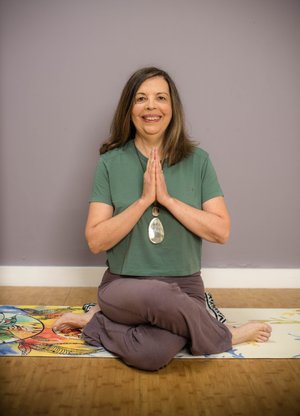
Yoga Nidra: The Art of Conscious Rest
Yoga Nidra has been part of my life for a very long time, although I didn’t always know it by that name.
When I was seven years old, in 1969, Dr. Isaac Koziak, an asthma specialist based in Buenos Aires, Argentina, taught me a deep relaxation practice. He didn’t call it Yoga Nidra. It was only much later that I recognized what I had learned as a child as a form of this practice.
It stayed with me.
Through different seasons and circumstances, this practice has been one of my best friends. I have returned to it for rest, comfort, and restoration, and I continue to return to it today.
What Is Yoga Nidra?
Yoga Nidra is often translated from Sanskrit as “yogic sleep.” Yet the purpose is not simply to fall asleep.
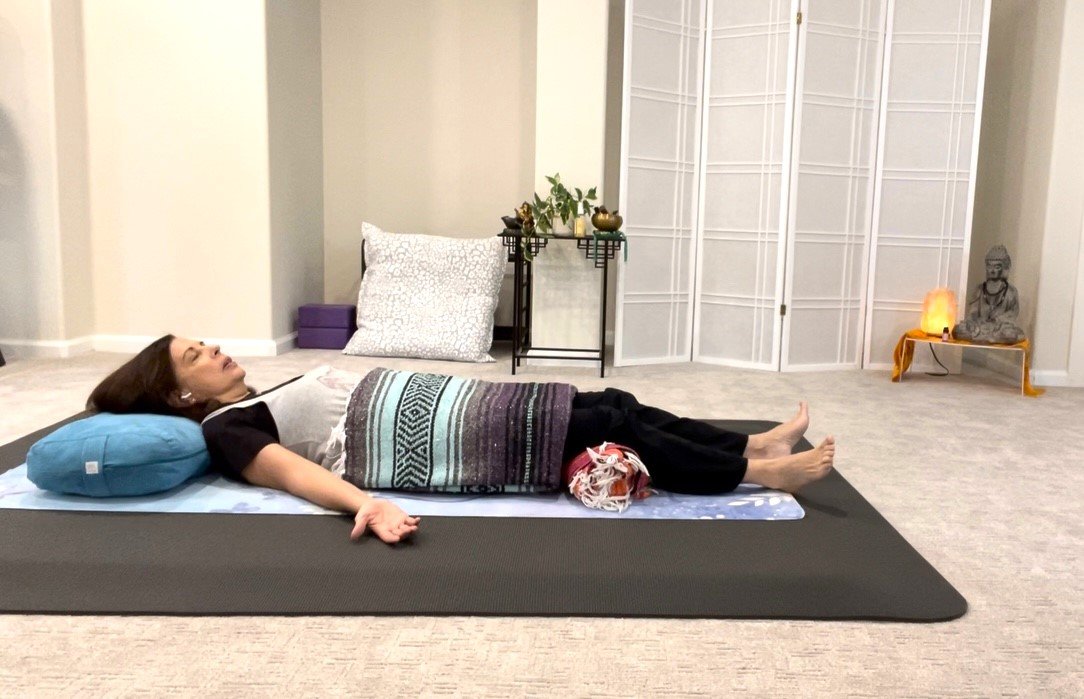
In a typical practice, we lie down comfortably, close the eyes, and follow a teacher’s voice through a progressive journey of awareness. The body becomes increasingly still and relaxed while we maintain a gentle connection with awareness.
There is very little to do. We are invited to listen, feel, notice, and rest.
That quality is one of the things I love most about Yoga Nidra. In a culture that places so much emphasis on doing, achieving, and improving, Yoga Nidra gives us permission to simply be.
Ancient Roots and a Modern Practice
The history of Yoga Nidra is fascinating because the ancient and modern uses of the term are not exactly the same.
References to yoga nidra appear in Indian texts long before the development of the guided relaxation practice familiar to us today. Historically, the term was associated with profound states of yogic or divine sleep and with states of consciousness beyond ordinary waking experience.
The systematic guided practice that many of us now call Yoga Nidra developed much later.
One of the most influential figures in its modern development was Swami Satyananda Saraswati, founder of the Bihar School of Yoga. During the 20th century, Satyananda developed and popularized a systematic method of Yoga Nidra, drawing in part from older tantric practices, particularly nyasa, in which mantra and awareness are directed systematically to different parts of the body.
His method organized Yoga Nidra into a sequence that has strongly influenced the way the practice is taught today. It may include settling the body, establishing a Sankalpa, rotating awareness through different parts of the body, observing the breath, experiencing contrasting sensations, visualization, returning to the Sankalpa, and gradually bringing awareness back to the external environment.
Many contemporary teachers have adapted the practice in different ways, so there is no single Yoga Nidra script or experience. But the central invitation remains remarkably simple: allow the body to rest deeply while awareness gently observes.
Sankalpa: Planting a Seed
An important element in many Yoga Nidra practices is the Sankalpa, often translated as an intention or heartfelt resolve.
A Sankalpa is different from making a list of things we want to accomplish. It can be understood as a short statement that reflects something meaningful we wish to cultivate or recognize within ourselves.
For example:
I am steady and strong.
I trust myself.
I meet life with courage.
I am at peace.
The Sankalpa is traditionally repeated during the receptive state of Yoga Nidra, often near the beginning and again toward the end.
I like to think of it as planting a seed and allowing it to take root in its own time.
Yoga Nidra and Sushumna Nadi
In the Yoga Nidra practice I am sharing below, I also invite you to bring awareness to Sushumna nadi.
In traditional yogic subtle anatomy, the nadis are pathways through which vital energy is said to move. Sushumna is described as the central channel and is associated with the central axis of the subtle body and the spine.
Sushumna is not an anatomical structure such as a nerve or blood vessel. It belongs to yoga’s traditional subtle-body map.
For me, it also offers a beautiful contemplative image: a central pathway of steadiness and stillness.
As the body relaxes and the activity of the mind begins to settle, we can bring awareness toward this central axis and experience the sense of returning to our center.
What Are the Benefits of Yoga Nidra?
The simplest benefit may also be the most immediately noticeable: deep rest.
Yoga Nidra deliberately creates conditions in which we can reduce external stimulation, become physically still, and turn attention inward. Many people emerge from a practice feeling calmer and more restored.
Modern research is beginning to investigate these effects. Studies and reviews have explored Yoga Nidra in relation to stress, anxiety, sleep, psychological well being, and aspects of cognitive and physiological functioning. The evidence is promising, although the research base is still developing and studies vary considerably in size and quality.
Regular practice may support:
Relaxation and stress reduction. The systematic settling of body and attention can help shift us away from a state of constant mental and physical activation.
Sleep. Yoga Nidra has been studied as a possible support for sleep quality and sleep related difficulties. Interestingly, we practice conscious rest rather than deliberately trying to fall asleep.
Emotional regulation. Learning to notice sensations, thoughts, and emotions without immediately reacting to them may help us develop a different relationship with our inner experience.
Body awareness. The rotation of consciousness through different parts of the body encourages us to experience the body from within rather than simply think about it.
Mental well being. Emerging research suggests potential benefits for stress, anxiety, and general psychological well being.
Yoga Nidra is not a cure all, nor is it a substitute for appropriate medical or mental health care. I prefer to think of it as one more resource in our wellbeing kit, something we can return to when we need rest, grounding, or a little more space around whatever we are experiencing.
A Practice of Returning
Perhaps one of the reasons Yoga Nidra has remained with me for so many years is its simplicity.
I learned the essence of it as a seven year old child without knowing its Sanskrit name, its history, or its philosophy. I simply knew the experience of becoming still, listening, and relaxing deeply.
Decades later, my understanding of the practice has changed enormously. I now know about its yogic roots, Sankalpa, Sushumna, and the traditions that shaped modern Yoga Nidra.
But underneath all that knowledge is still the experience I discovered as a child.
Lie down.
Become still.
Listen.
Allow yourself to rest.
Experience Yoga Nidra With Me
If you would like to experience the practice rather than simply read about it, I invite you to join me for Coming Home to Yourself, my guided Yoga Nidra practice on YouTube.
Find a comfortable place to lie down. You may want a blanket, a pillow, or a bolster for support. Then give yourself permission, for a little while, to have nowhere else to go and nothing else to accomplish.
Yoga Nidra has been one of my best friends for more than half a century.
Perhaps it can become a good friend to you, too. 💚